High-frequency econometrics: from realized volatility to realized drift
DGPE PhD course at the Department of Mathematical Sciences, Aalborg University
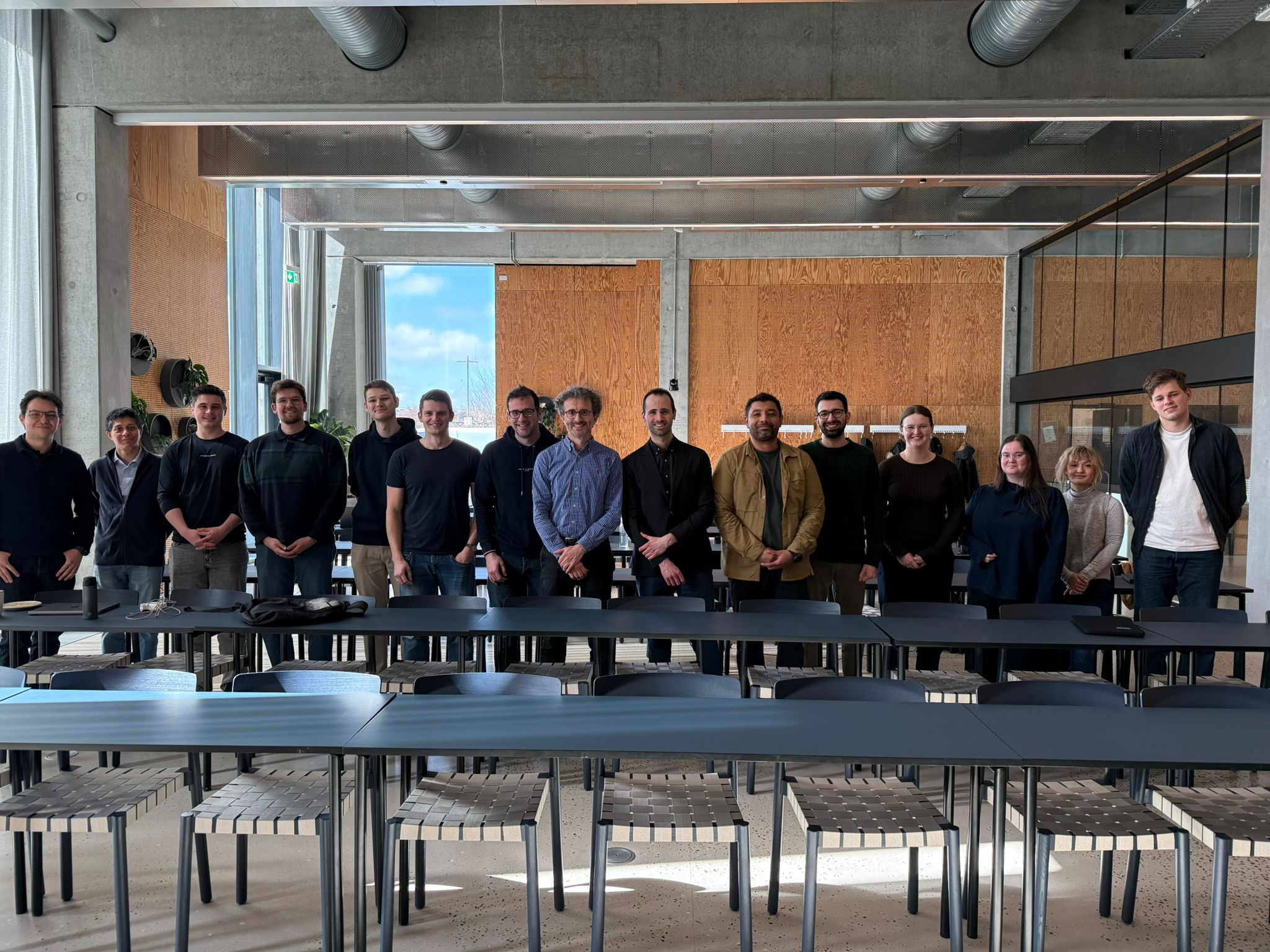
Thank you for joining us to the PhD Course in High Frequency Econometrics. Keep an eye on this page for updates and information about future courses.
Course Description
The course is designed for PhD students who have an interest in the application of time series methods to financial data. The analysis of tick-by-tick financial data has become a central topic in financial econometrics, driven by the increasing availability of such data. Compared with traditional time series, high-frequency data provide a substantial number of observations, which can yield richer information.
This course consists of two parts. The first part introduces the fundamental concepts of continuous-time econometrics, such as how to model log-prices, the infill asymptotic regime and how to estimate realized volatility. We also revise the concepts of Brownian motion and Poisson process.
The second part will show the development of a recent research agenda which was devoted to the analysis of the drift component of the Itô semimartingale. The topics covered will be:
- Why drift is invisible in the classical case?
- Non classical model 1: drift bursts
- The economics of drift bursts
- Non classical model 2: frequency-dependent drift
- Back to the classical model: drift estimation
- Application: flash crashes, volatility explosions, volatility forecasting, momentum trading.
Bibliography:
Laurent, S., and Shi, S. (2020). Volatility estimation and jump detection for drift–diffusion processes. Journal of Econometrics, 217(2), 259-290.
Christensen, K., Oomen, R., and Renò, R. (2022). The drift burst hypothesis. Journal of Econometrics, 227(2), 461–497.
Laurent, S., and Shi, S. (2022). Unit root test with high-frequency data. Econometric Theory, 38(1), 113-171.
Andersen, T. G., Li, Y., Todorov, V., and Zhou, B. (2023). Volatility measurement with pockets of extreme return persistence. Journal of Econometrics, 237(2), 105048.
Laurent, S., Renò, R., and Shi, S. (2024). Realized drift. Journal of Econometrics, 179, 105813.
Flora, M., Ferrara, G., and Renò, R. (2025). The Impact of COVID-19 on Italian Sovereign Bond Market Quality. Journal of Financial Services Research, 67, 55–71.
Flora, M., and Renò, R. (2025). V-Shapes. Journal of Banking and Finance, 179, 107521.
Kolokolov, A., Renò, R., and Zoi, P. (2025). BUMVU estimators. Journal of Econometrics, in press, 105942.
Bellia, M., Christensen, K., Kolokolov, A., Pelizzon, L., and Renò, R. (2025). Do Designated Market Makers Provide Liquidity During Extreme Downward Price Movements? Journal of Financial Markets, 76, 100988.
Benvenuti, F. and Renò, R. (2025). A seismometer for Itō semimartingales. Working Paper.
Aït-Sahalia, Y. and Jacod, J. [2014], High-frequency financial econometrics, Princeton University Press.
Jacod, J. and Protter, P. E. [2012], Discretization of Processes, 2nd edn, Springer-Verlag, Berlin.
Instructors
Assistant professor Francesco Benvenuti, Aalborg University.
Associate professor Orimar Sauri, Aalborg University.
Professor Roberto Renò, ESSEC Business School.
Prerequisites
Prerequisites: graduate level knowledge of statistics or econometrics; notions of probability theory and analysis.
ECTS Credits
The course offers 2 ECTS credit points. A diploma for participation will be given to all attendees.
In order to receive the 2 ECTS the students will have to submit a referee report of a paper assigned randomly, which deals with the topic of the course.
Logistics
Schedule
This course corresponds to 2 full days of teaching (12 hrs) in addition to readings and exam. The course will be held on the 26th and 27th March.
Both days will be organized in two sessions, one in the morning (9:00–12:00) and one in the afternoon (13:00–16:00). Course dinner will be held on the evening (19:00) of March 26, 2026.
Venue
The course will be held at AAU Innovate, Aalborg University, Aalborg, Denmark.
The building is located at Thomas Manns Vej 25, 9220 Aalborg East, Denmark.
Lunch and Course Dinner
Lunch, tea and coffee throughout the course and one course dinner for all participants are included in the course fee. The course dinner will be held on the evening of March 26, 2026, at Det Glade Vanvid in Aalborg.
Registration
Registration for the course is now closed.
Please register for the course by filling in this form no later than March 12, 2026.
Fee
The course is free of charge for DGPE (Danish Graduate Programme in Economics) members from AAU, AU, CBS, KU, and SDU, and for PhD students from Economics Departments at Nordic universities outside Denmark. For participants from other institutions, there is a standard fee of 100 EUR per day (200 EUR for the entire course).
Thanks to the DGPE support, lunch, tea and coffee throughout the course and one course dinner for all participants is included.
Costs associated with transportation and accommodation should be covered by the participants’ home institutions.
Questions
For any questions regarding the course, please contact Francesco Benvenuti, fraben@math.aau.dk.
We look forward to welcoming you!